Big tile, set flat, in Naperville homes
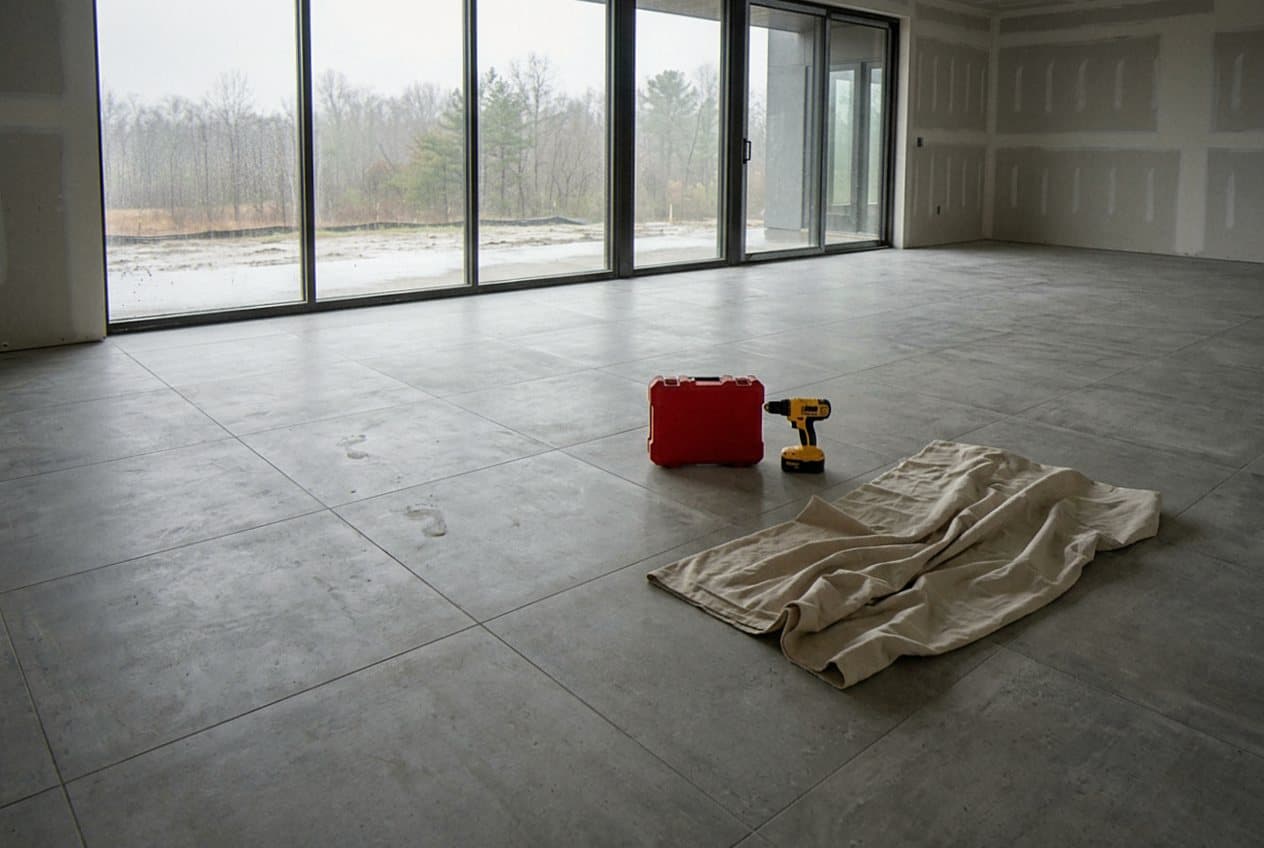
Large tile reads calm because there is so little grout in the way. One field of color runs from the wall to the island, and a room looks wider than it really is. That look comes with a rule attached. The floor under it has to be flat, and flat means something specific here. For tile with a side of fifteen inches or more, the trade standard asks for no more than an eighth of an inch of dip or rise over ten feet. Very few Naperville floors show up that way on their own. A basement slab in an older home near the historic district can roll a quarter inch in three steps. A newer build out toward Tall Grass or White Eagle may have long joist spans that crown right down the middle of the kitchen. We find all of that first, with a long straightedge and a laser, before anyone talks about tile. Then we fix it. Sometimes a high spot in a slab gets ground down. Sometimes we float patch into the low areas and feather the edges until the surface reads flat under the straightedge. On a wide open floor we often prime the whole room, dam the doorways, and pour a self leveling underlayment that finds its own level overnight. That day of prep is the day that decides how your finished floor feels for the next twenty years. Skip it and you get lippage, which is the small ledge where one tile edge stands proud of the next. You feel it through a sock. You catch a toe on it. Late in the day, when low sun comes through a west window and rakes across the floor, every one of those ledges throws a shadow, and no amount of good tile hides it. We would rather spend an extra day on the substrate than hand you a floor you notice every single morning.
Layout gets decided before the first bag of mortar is mixed. We measure the room, find the longest sightline, and snap our lines off that instead of off a wall, since framing rarely hands us a wall that runs true. Then we dry lay a run of tile across the floor and study where the cuts land. The goal is simple enough to say out loud. You should step onto a whole tile at the doorway, and the skinny piece should end up under a cabinet run or against the wall nobody studies. On a big tile floor that call matters more than usual, since a sliver cut sitting next to a two foot tile is the first thing a guest sees. Offset is the other early decision. Owners often ask for the half offset brick pattern they saved from a photo. With tile fifteen inches or longer we talk them out of it, and the reason is the tile itself. Every large piece carries a slight bow through the middle, a crown you will never spot in the box. Put the high middle of one tile beside the low end of another and you have built a ledge into the floor. Holding the offset to a third of the tile length or less keeps those two points close together, so the surface stays even underfoot. Setting goes slower than people expect. We comb mortar in one direction with a large notch trowel, then we butter the back of each tile so the whole underside makes contact and nothing is left hollow. Hollow spots are where tile cracks later, under a chair leg or a dropped pan. Through the day we pull a tile back up now and then and look at the mortar on the back, because that is the only honest way to know the coverage is really there. Leveling clips and wedges go in at every joint to hold neighboring edges in one plane while the mortar firms up. On a shower wall or a fireplace face we brace the first course, since a heavy tile wants to slide down the wall before the mortar grabs it. None of this is exotic. It is just patient, and it is where big tile jobs are won or lost.
- We measure your floor before we ever talk about tile size. A ten foot straightedge and a laser tell us how far off flat the room really is, and that number decides the prep. Grinding a high spot, floating patch into the low areas, or pouring a self leveling underlayment all get you to the same place. They just take different amounts of time. You hear which one your floor needs, and what it adds to the schedule, before anybody orders a single box of tile.
- Layout gets dry laid on your actual floor instead of sketched from a photo. We snap our lines off the longest sightline in the room, put whole tiles where the eye lands first, and push the thin cuts out of view. On anything fifteen inches or longer the offset stays at a third or less. That single choice keeps the natural bow in a big tile from turning into an edge you feel every time you cross the room barefoot.
- Coverage gets checked, not assumed. We comb the mortar in one direction, butter the back of every tile, and lift a piece back up now and then to see how much of it actually made contact. Wet areas get the tightest coverage of all, because a void behind a shower tile is just a place for water to sit and wait. Anything that sounds hollow comes up and gets reset the same day, while the mortar is still fresh and nothing has locked in.
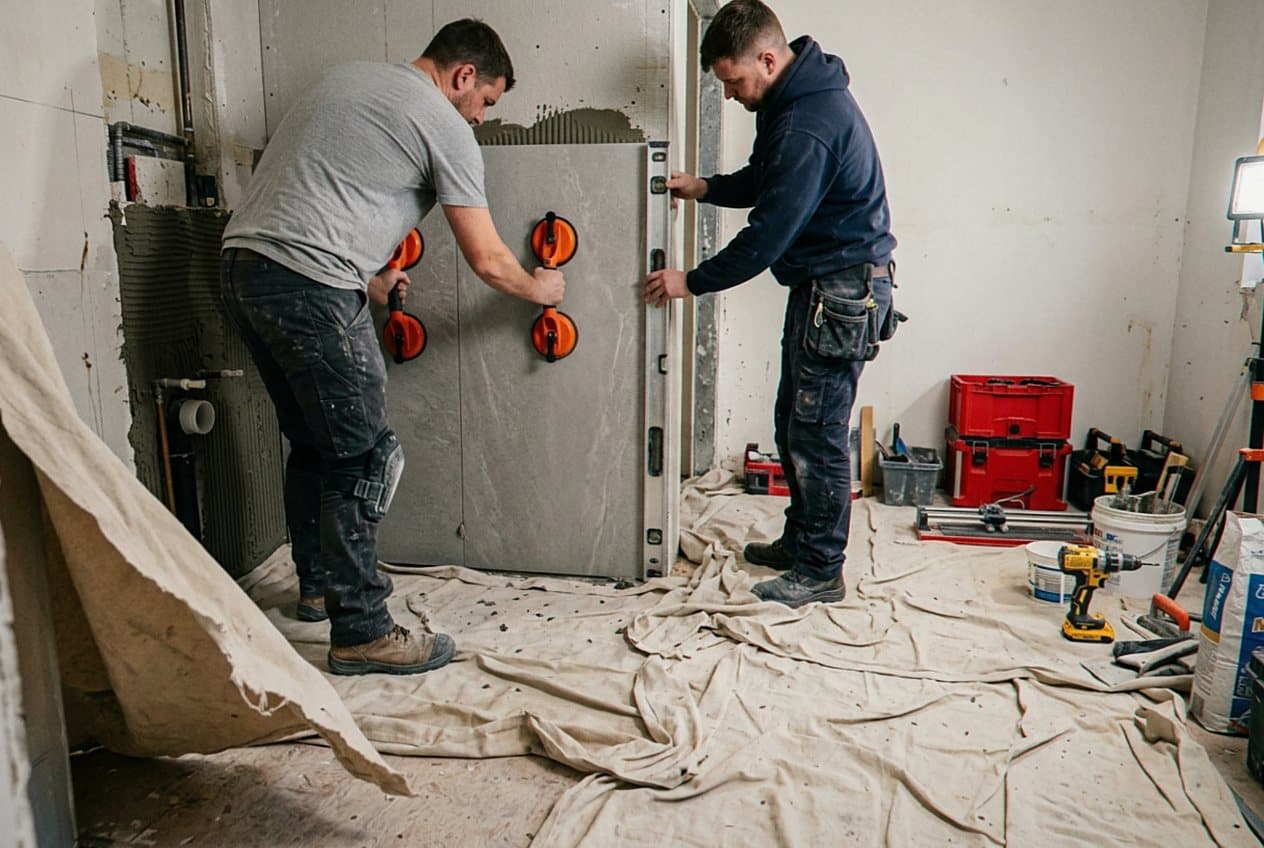
- Big tile is a two person lift and a different set of tools. Suction cups to place it, a rail cutter for long clean cuts, and a wet saw with the water running the whole time. Chipped edges and airborne dust both drop way off when the work is done that way. We cover the path in and out, close the room off with plastic, and run a vacuum right at the blade, since porcelain dust travels and you should not be finding it on a bookshelf next month.
- The finish details get planned early, not improvised at the end. Soft joints at the perimeter, a movement joint in any long open run, thresholds where the tile meets wood or carpet, and door bottoms that still swing clear once the floor gains height. We work all of that out before setting starts. Then we grout, wipe the haze off, and walk the room with you under real daylight, so anything you want looked at gets handled while we are still there.
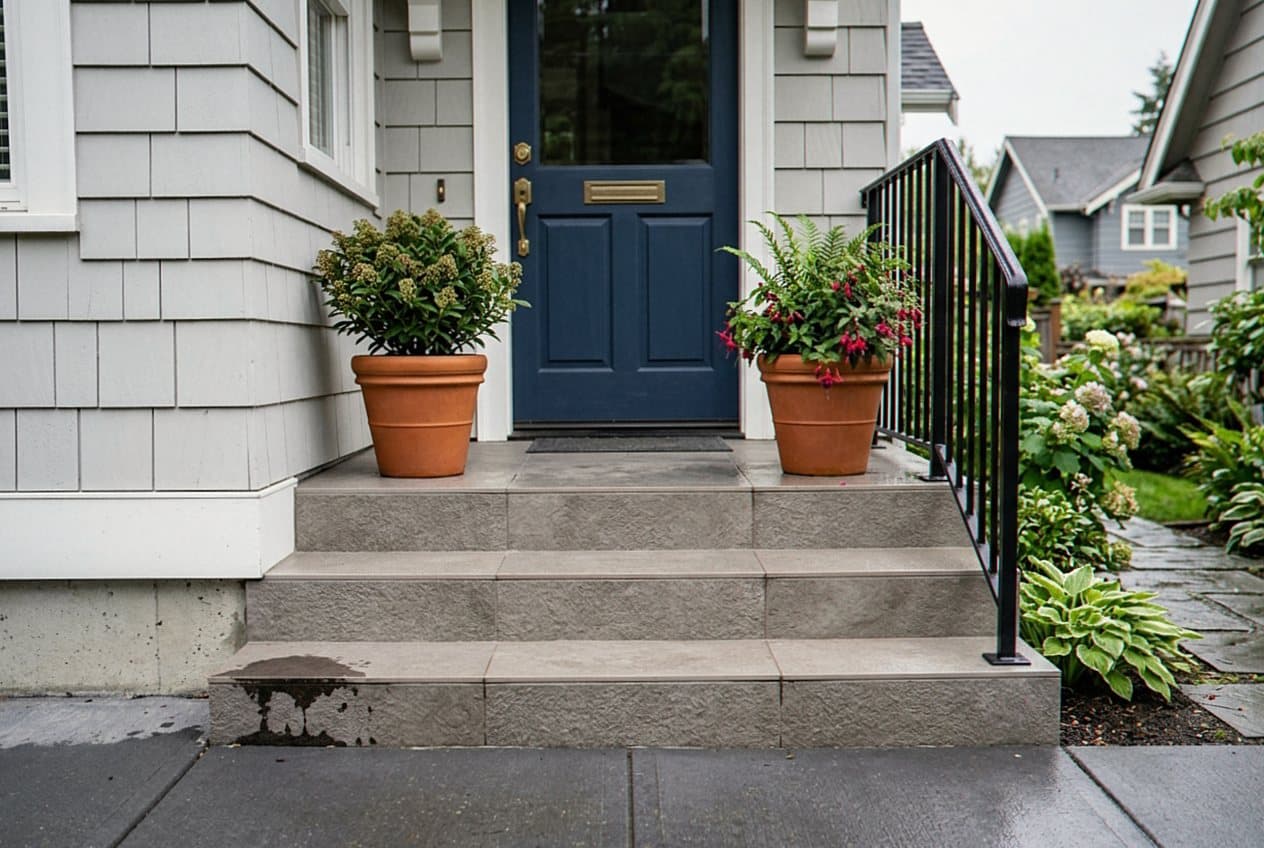
Naperville homes push a few of these details harder than others. Our winters run dry and our summers run heavy with humidity, so a house here swells and shrinks a little through the year, and big tile has no give in it at all. That is why we leave a soft joint around the edge of every room, tucked out of sight under the base trim, and break up long open runs with a movement joint where the field gets wide. Kitchens that flow into a dining room and then out to a sunroom are common on the newer streets, and those long floors are the ones that need a joint planned in from the start. Basements are their own conversation. A slab down there stays cool and gives up ground moisture for years. We test it, then pick setting materials that can live with what we find. Any crack that has settled and gone quiet gets an isolation layer over it, because a slab crack will telegraph straight through a two foot tile and split it. Radiant heat gets run through a full cycle before we start. It stays off while the mortar cures, then comes back up slowly. Entries take the worst of it from November through March, when road treatment and grit come in on every pair of boots, so near the door we favor a dense porcelain with a real slip rating and a grout that will not go blotchy on us by spring. In showers and tub surrounds, big tile earns its keep for another reason. Fewer grout lines means fewer places for soap film to collect, and a wall that wipes down in one pass instead of ten. That only works if the waterproofing behind it is done right, so we build the wet area as a system and test it before a single tile goes up. We work all over town and out through Lisle, Wheaton, Warrenville, Aurora, and Bolingbrook. The housing stock shifts street by street. What we do first never changes. We look at what is really there, tell you plainly what it needs, and start from the substrate up.
Tell us the room and the tile you have your eye on, and we will tell you what the floor or the wall behind it needs first. We will walk the space, put a straightedge on it, and give you a straight read on the prep, the layout, the offset, and how many days the room is out of use. If the tile you picked is a poor fit for that spot, you will hear that too, along with what we would set instead. No pressure and no runaround. Call us, or send the room measurements and a photo, and we will get you on the schedule.