Shower Tile Installation · Naperville

Shower Tile Installation in Naperville, IL, Built to Stay Dry

We seal the wet area first, then set the tile. Your Naperville shower is ready for every morning after that.

Free Quote

Free Shower Tile Installation quote.

We reply within 1 business hour. No spam, ever.

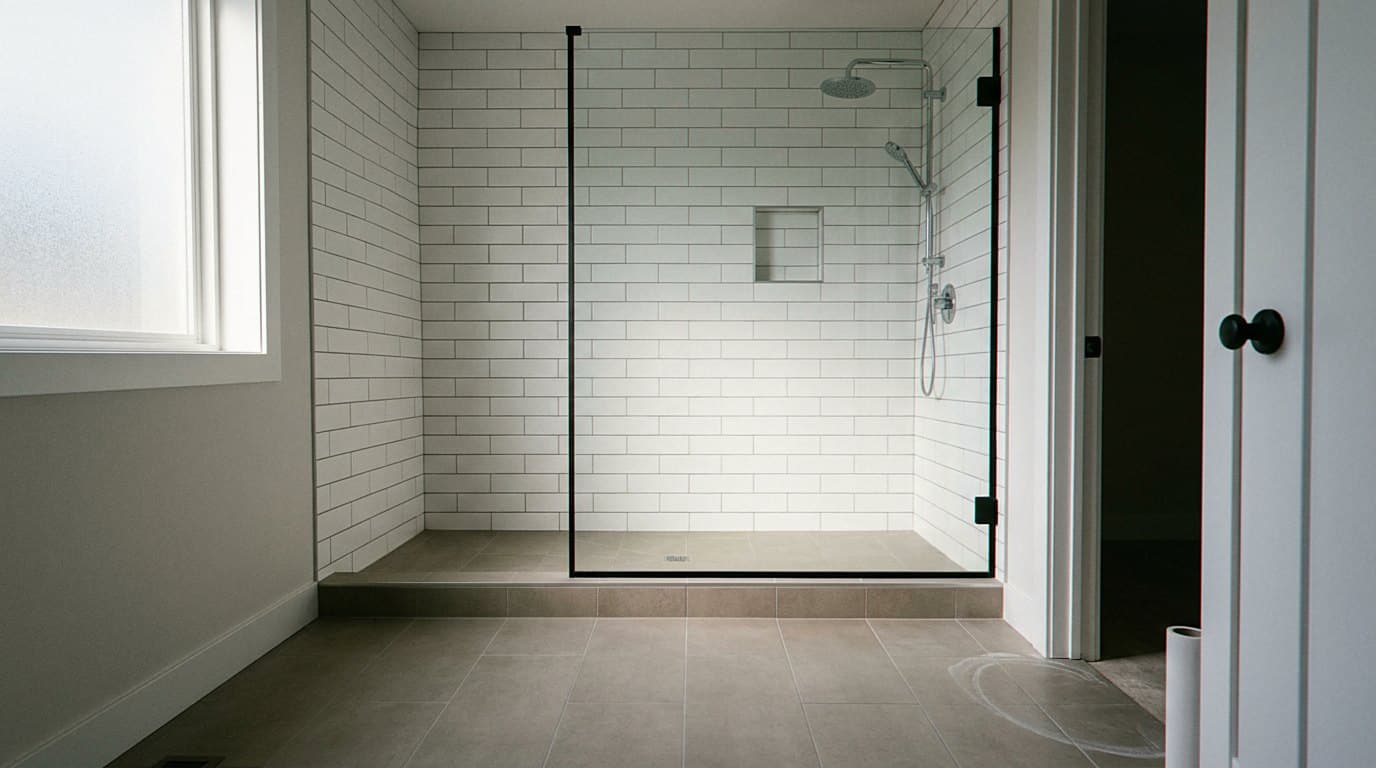
Bright white subway-tile walk-in shower with glass panel
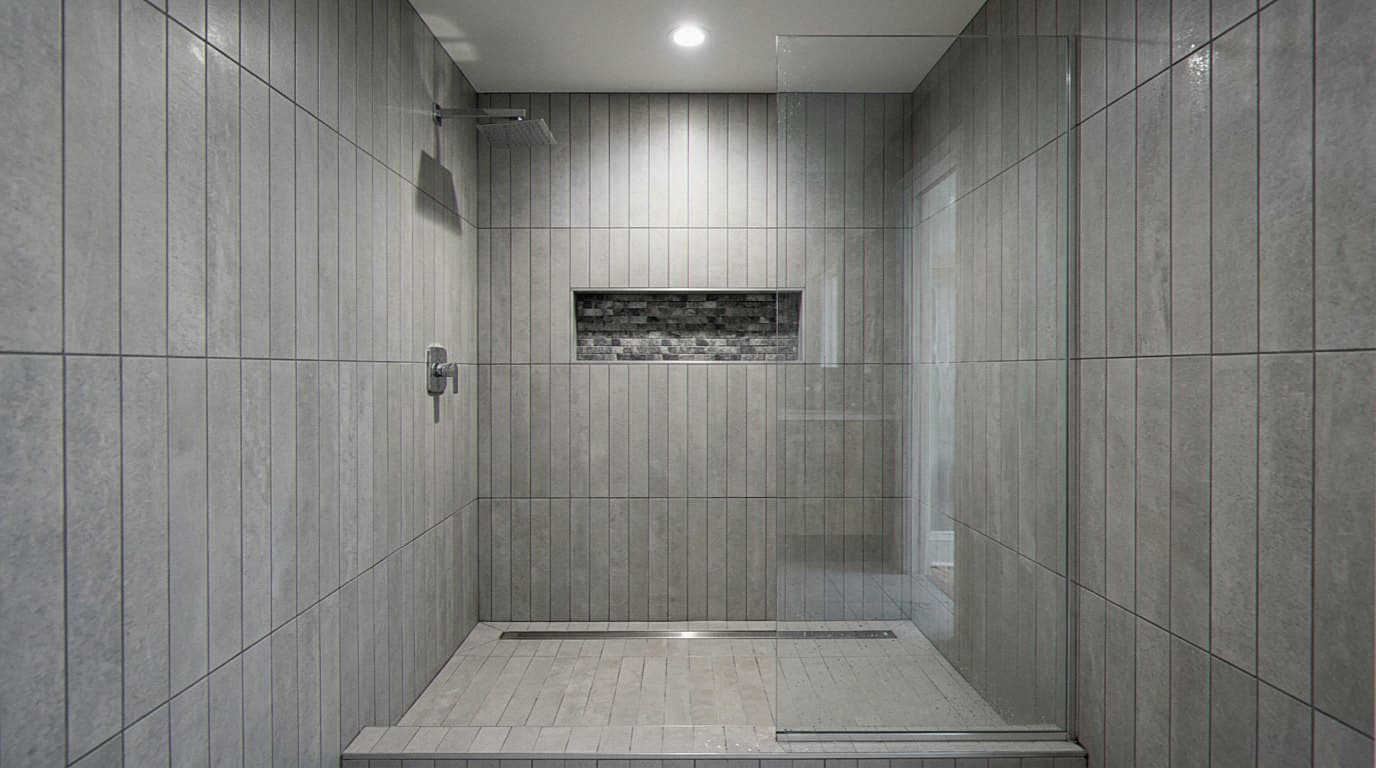
Modern gray stone shower with sleek glass divider
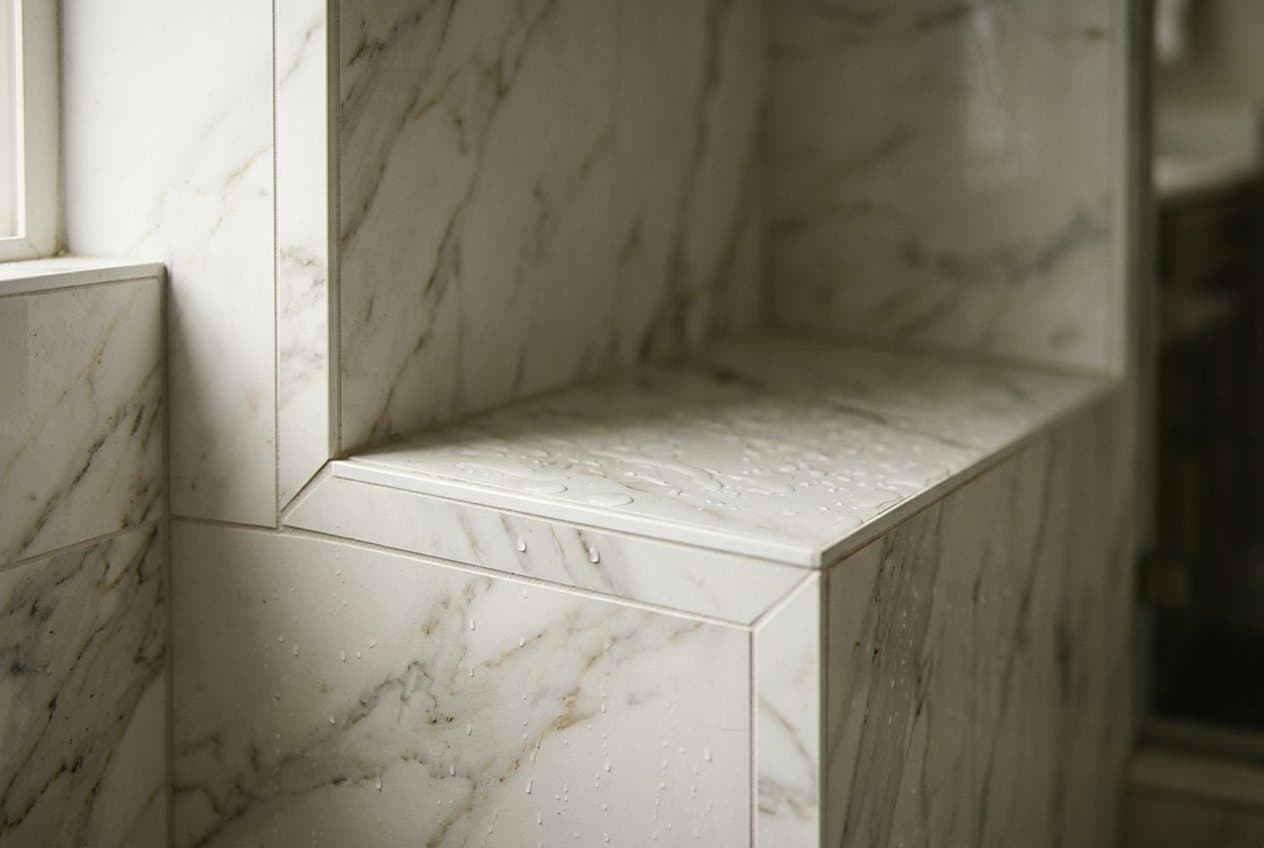
Marble shower bench corner with water droplets
What we do

How we build a shower that stays dry

Almost every leaking shower we open in Naperville failed the same way, and the tile was never the cause. Water found a seam behind the wall, then spent a few quiet years soaking framing while the surface still looked fine. In the older homes near the historic district we find tile set right on drywall. In the newer subdivisions on the south side we pull out builder grade pans with a thin liner and a drain that nobody sealed. The early signs are easy to miss. A grout line goes dark in one corner, a bead of caulk keeps splitting, and the ceiling under a second floor bath picks up a faint ring.

So we work from the back forward. The old shower comes out to the studs, and any wood the water reached gets cut out and replaced before we build. The base goes in sloped to the drain, the walls get board made for wet areas, and every corner, seam, and fastener is sealed into one layer. We follow the membrane maker's method to the letter, since ANSI A118.10 is the standard the material is tested against. Then the pan gets a flood test. Water sits in it overnight and we read the mark in the morning. Only after that does a tile go on the wall.

  • Waterproofing goes in as one connected layer, from the drain flange to the top of the wall.
  • We flood test the pan overnight, so a leak shows up on our watch and not yours.
  • The base gets a real slope, so water leaves instead of pooling along the curb.
  • We map the layout first, so full tiles land at eye level and cuts fall in the corners.
  • One crew runs demo, prep, tile, grout, and cleanup, so the job keeps moving every day.
The tile is what your guests notice. The layer behind it keeps the water where it belongs.

Scope drives the schedule far more than square footage does. A tub surround in a Naperville ranch is usually a few days of work with drying time between steps. A shower with no curb, a bench, a niche, and a linear drain runs longer, because the base, the membrane, and the flood test each own a day. We will not rush a cure to hit a date on a calendar. Grout goes in once the mortar has set, and the glass goes last so nobody drills through fresh work. You get the real timeline up front, and a call from us the same day if something behind the wall changes it.

If your shower is leaking, or the tile has looked tired since the day you moved in, call us and tell us what you see. We will ask a few questions, walk the bathroom with you, and hand you a plain scope of the work. We are in Naperville every week, plus Lisle, Wheaton, Warrenville, Aurora, and Bolingbrook.
Materials

Tile and waterproofing choices for a Naperville shower

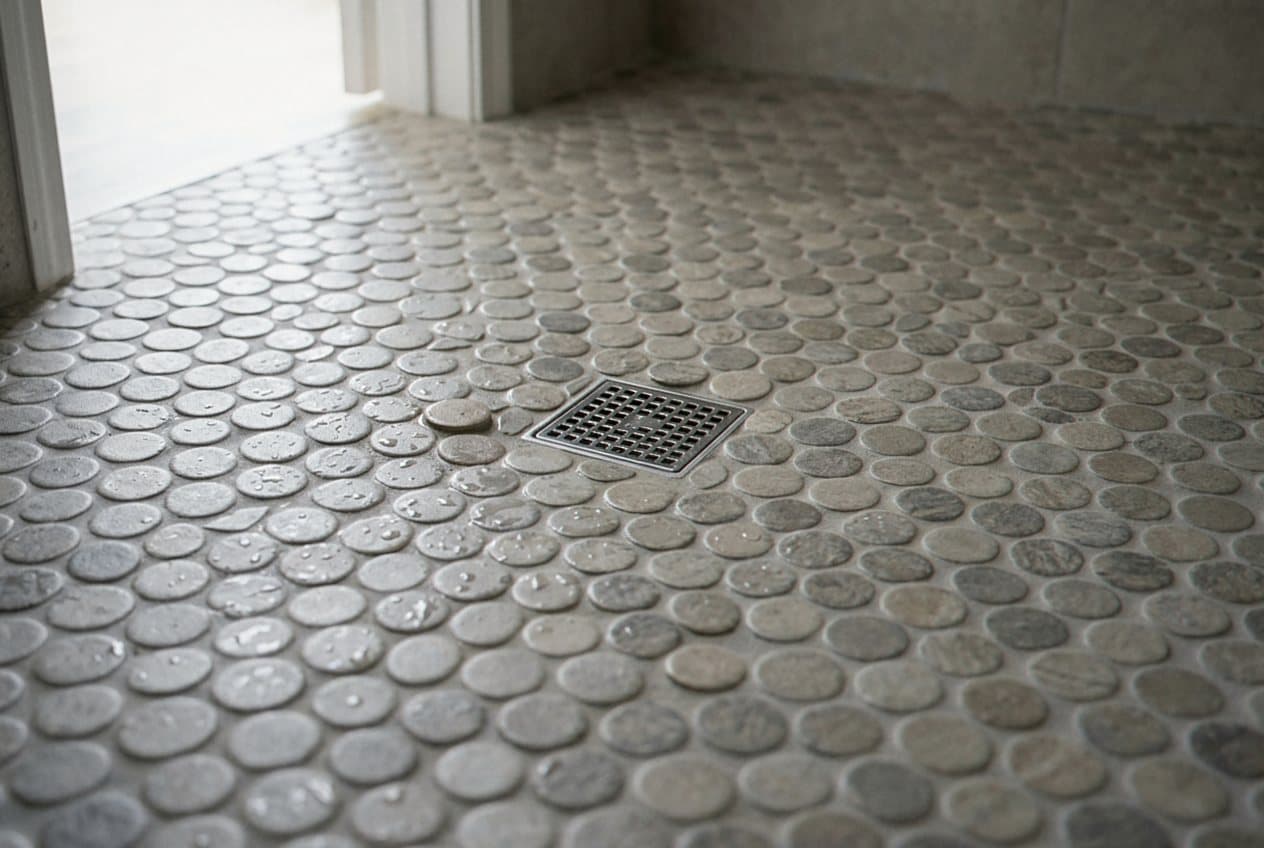
Porcelain is what we set in most Naperville showers. It drinks almost no water, it takes daily use well, and it runs from small mosaic sheets to wall panels the size of a door. Ceramic is easier on the budget and fine on walls, though the cut edges chip when a crew gets careless. Natural stone reads warm and rich in a primary bath, and it asks more of you later, since marble and travertine want sealing and mild cleaners. Glass mosaic makes a clean niche liner or accent band. A full wall of it will show every wave in the substrate behind it, so the prep has to be flat. On the shower floor we stay with small tile or a textured porcelain, because more grout joints give a wet foot something to grip.

What sits behind the tile matters more than the tile itself. Foam board with taped seams gives us a flat waterproof wall in one pass, and it stays light enough to handle in a tight second floor bath. Cement board with a liquid membrane rolled over the face is the older path and still a good one when the framing is true. For the base we either float a mortar bed under a sheet membrane or set a molded pan and bond the drain into it. Then comes grout. Cement grout with a sealer suits a guest bath that gets used a few times a week, and it is the cheaper way in. Epoxy grout costs more in labor, shrugs off soap film, and holds its color in a shower that runs every morning. We bring samples and talk all of it through before anything gets ordered.

  • Porcelain wall tile. It soaks up almost nothing, comes in many sizes, and is our default in a shower used every day.
  • Small or textured floor tile. More grout joints mean more grip underfoot and less water standing on the pan.
  • Sheet or liquid membrane. This is the layer that stops water, and we install it to the method ANSI A118.10 covers.
  • Epoxy grout. Harder to place, easier to live with in a busy shower, and it holds color against mineral film.
Round pebble mosaic shower floor around center drain
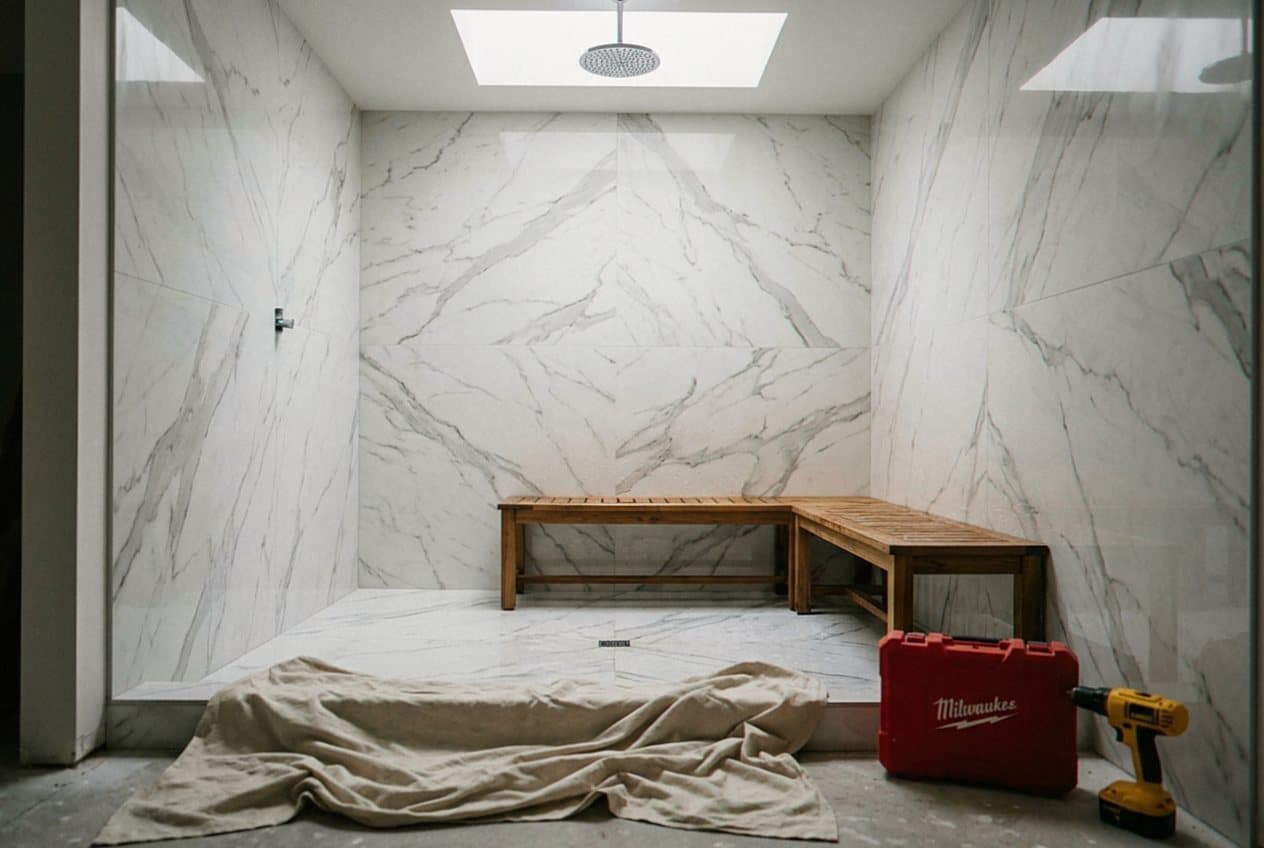
Marble walk-in shower with built-in teak bench
What about the alternatives?

Shower wall systems we see in Naperville homes

Homeowners here like to see the options side by side before they spend real money. This list comes from what we install week to week and from what we get called back to repair. Use it as a starting point for the walkthrough, not as the final answer for your bathroom.

Porcelain tile over foam backer board

Our standard build. The board is waterproof on its own, the seams and corners get sealed into it, and porcelain takes a daily beating without soaking anything up. The board costs more than plain cement board and it saves hours on the wall.

Recommended

Porcelain over cement board with a liquid membrane

A solid route when the framing is true and the budget is tight. The rolled membrane has to go on at the right thickness in two coats, so the result lives or dies on how careful the crew is. We still build showers this way when it suits the job.

Acceptable

Natural stone over a sealed wet wall

Rich looking in a primary bath and heavier in every sense. Stone wants a stiff wall, patient setting, and sealing on a schedule, and our mineral heavy water will spot it if nobody wipes it down. A good pick for an owner who enjoys the upkeep.

Acceptable

Large panel tile on the walls

Fewer grout joints and a calmer look, though the wall has to be flat within a tight range or the panel corners lift. We flatten first, then set. Moving pieces that size up to a second floor bath takes two people and a plan for the stairs.

Acceptable

Tile set straight onto drywall or green board

This is what we tear out most often in older Naperville bathrooms. Paper faced board behind a shower turns soft, the grout stains, and the studs pay for it. On day one it looks the same as a real build, then it fails quietly for years.

Skip

One piece acrylic insert instead of tile

It goes in fast and it does keep water out. The tradeoff is a fixed size, a plastic surface that scratches and dulls, and no way to change the look later. If you want a tiled shower, this is a detour rather than a shortcut.

Skip
How it goes

From quote to walk-on, fast.

01

Your inquiry

Call or send the short form with what is going on at your place. A sentence or two is plenty for the first step.

02

We talk it through

We go over the situation on the phone, ask the questions that matter, and tell you what we would do next.

03

A clear plan

You get a plain-language rundown of the work, the order it happens in, and what to expect on the day.

04

The work gets done

Our crew shows up when we said, does the job, and walks you through the result before leaving.

Before you book

Straight answers before you commit

These are the questions Naperville owners actually ask us while we are standing in the bathroom doorway. Here are the same answers we give on site, and none of them change once we write the scope.

How long will my bathroom be out of service?
Plan on the shower being unusable for the run of the job, while the sink and toilet stay in play most days. A tub surround usually takes a few days of work. A full build with a new base, a bench, and a niche runs longer, since the membrane and the flood test each need a day of their own. You get the plan day by day before we start, so you can arrange the mornings around it.
Can you just fix the corner that leaks?
Sometimes, and we will tell you honestly which case you are in. If the tile is sound and the trouble is a failed bead of caulk where two planes meet, that is a repair and we treat it as one. If water has been moving behind the wall, patching the surface only buys quiet time. We open a small area, look at what the water did, and price the real fix instead of guessing from the door.
Do you handle the demolition and the mess?
Yes. The same crew does the tear out, hauls the debris, and runs the tile work. We lay floor protection along the path from your door to the bathroom, tape plastic at the doorway, and run a vacuum on the cutting so dust stays in one room. The old shower leaves in our truck, not on your driveway, and the site gets swept before we go each evening.
What does a flood test actually prove?
It proves the base and the drain hold water before anything covers them up. We plug the drain, fill the pan, mark the water line, and leave it overnight. In the morning the mark either sits where we left it or it does not, and that is the whole answer. Skipping this step is how a shower passes on day one and stains a ceiling three winters later.
Can you make the shower easier to step into?
Yes, and we get asked often in Naperville, usually by owners who plan to stay in the house. We can drop the curb, run a linear drain along the back wall, and bring the shower floor level with the bathroom floor. Blocking for a grab bar goes in while the wall is open, which costs very little now and means tearing tile out later if we skip it.
Will the new tile match the rest of my bathroom?
We settle that with you before a single box gets ordered. Bring us the floor tile, the vanity door, and the paint chip, or we look at them on site. Then we set samples in the room and check them in daylight and again under the fixture you use at night. Tile that looks warm under showroom lights can read cold and gray in a bath that faces north.
Aftercare

Keeping a Naperville shower looking new

Our water arrives from Lake Michigan through the county system, and it carries enough mineral to leave a film on glass and grout. That film is what makes a shower look tired long before the tile is worn out. The fix is boring and it works. Squeegee the glass, run the fan, and keep harsh cleaners away from stone and colored grout. Grout does not last forever either, and the silicone in the corners is a wear part by design, since those joints move a little every time the room warms up and cools down. We would rather come back and lay a fresh bead than watch a split joint feed water into a wall all winter.

  • Squeegee the glass and walls after the last shower of the day, which takes about twenty seconds and stops mineral film cold.
  • Run the exhaust fan during the shower and for twenty minutes after, so the room dries out instead of staying damp.
  • Clean with mild soap and water, and keep bleach and acid based products off natural stone and colored grout.
  • Reseal cement grout and stone on the schedule the material calls for, which is often once a year in a busy bath.
  • Watch the silicone in the corners and along the base, and call us when a bead splits instead of caulking over it.
  • Keep hair out of the drain, since slow water stands on the pan and works its way into the grout joints.
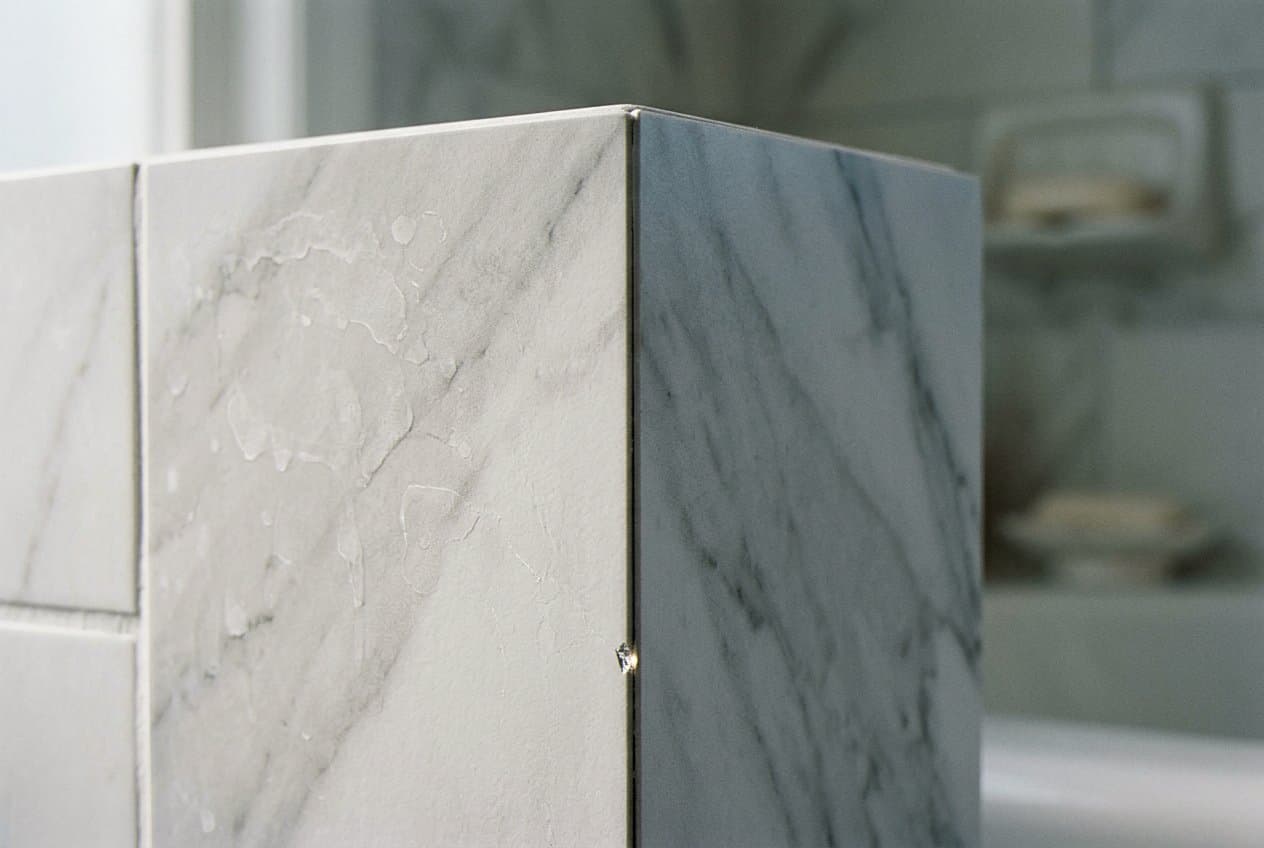
Mitered marble corner seam on a shower wall
FAQ

Shower tile questions we hear in Naperville

Ready when you are

Let's make your next steps easier

Tell us what is going on at your Naperville home and we will walk you through the options. One call or one short form is all it takes.

Call (331) 244-1148Make your inquiry
CallContact us